Hot and Important MCQs for Class 7-Chapter-3 Empires and Kingdoms: 6th to 10th Centuries Subject Social Science
Section A: Multiple Choice Questions:
1. Who ascended the throne of Kannauj in 606 CE?
a) Pulakeshin II
b) Harshavardhana
c) Dantidurga
d) Rajaraja Chola
Answer: b) Harshavardhana
2. Which Chinese pilgrim visited India during the reign of Harshavardhana?
a) Faxian
b) I-Tsing
c) Xuanzang
d) Megasthenes
Answer: c) Xuanzang
3. What was the capital of the Pallava dynasty?
a) Thanjavur
b) Kanchipuram (Kanchi)
c) Badami
d) Madurai
Answer: b) Kanchipuram (Kanchi)
4. The ‘Tripartite Struggle’ was fought for control over which city?
a) Pataliputra
b) Kannauj
c) Ujjain
d) Delhi
Answer: b) Kannauj
5. Who founded the Pala dynasty?
a) Dharmapala
b) Devapala
c) Gopala
d) Mahipala
Answer: c) Gopala
6. Which university did Dharmapala found?
a) Nalanda
b) Taxila
c) Vikramashila
d) Valabhi
Answer: c) Vikramashila
7. Who was the first independent Rashtrakuta ruler who overthrew the Chalukyas?
a) Krishna I
b) Dantidurga
c) Amoghavarsha I
d) Dhruva
Answer: b) Dantidurga
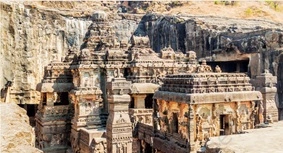
8. The Kailashanatha temple at Ellora was built by which Rashtrakuta king?
a) Dantidurga
b) Amoghavarsha I
c) Krishna I
d) Indra III
Answer: c) Krishna I
9. Who wrote the ‘Harshacharita’, a biography of King Harsha?
a) Kalidasa
b) Banabhatta
c) Harisena
d) Ravikirti
Answer: b) Banabhatta
10. What was the capital of the Chalukyas of Badami?
a) Kanchipuram
b) Vatapi
c) Manyakheta
d) Vengi
Answer: b) Vatapi
11. Which Chola ruler defeated the Pallavas in the late 9th century?
a) Vijayalaya
b) Aditya I
c) Rajaraja I
d) Rajendra I
Answer: b) Aditya I
12. The term ‘Mlechchha’ in ancient India generally referred to:
a) Traders
b) Foreigners
c) Priests
d) Farmers
Answer: b) Foreigners
13. Which book describes the history of Kashmir’s kings?
a) Harshacharita
b) Rajatarangini
c) Kadambari
d) Arthashastra
Answer: b) Rajatarangini
14. Who authored the ‘Rajatarangini’?
a) Bilhana
b) Kalhana
c) Banabhatta
d) Somadeva
Answer: b) Kalhana
15. The ‘Shore Temple’ at Mamallapuram was built by which dynasty?
a) Cholas
b) Pandyas
c) Pallavas
d) Chalukyas
Answer: c) Pallavas
16. Which Rashtrakuta king is known as ‘Nripatunga’?
a) Dantidurga
b) Krishna I
c) Amoghavarsha I
d) Govinda III
Answer: c) Amoghavarsha I
17. Who defeated Harshavardhana when he tried to extend his empire south of the Narmada?
a) Mahendravarman I
b) Narasimhavarman I
c) Pulakeshin II
d) Dantidurga
Answer: c) Pulakeshin II
More MCQs:
18. The monolithic statue of Bahubali is located at:
a) Ellora
b) Shravanabelagola
c) Badami
d) Kanchipuram
Answer: b) Shravanabelagola
19. Which mathematician introduced rules for operations with zero?
a) Aryabhata
b) Brahmagupta
c) Varahamihira
d) Bhaskara I
Answer: b) Brahmagupta
20. The famous ‘Nataraja’ bronze sculptures belong to which period?
a) Gupta
b) Pallava
c) Chola
d) Chalukya
Answer: c) Chola
21. Who was the famous queen of the Bhauma-Kara dynasty in Odisha?
a) Queen Didda
b) Queen Prabhavati Gupta
c) Tribhuvana Mahadevi I
d) Queen Rudrama Devi
Answer: c) Tribhuvana Mahadevi I
22. Which Arab general conquered Sindh in 712 CE?
a) Mahmud of Ghazni
b) Muhammad Ghori
c) Muhammad bin Qasim
d) Al-Masudi
Answer: c) Muhammad bin Qasim
23. The ‘Bhakti Movement’ initially started in which part of India?
a) North India
b) South India
c) East India
d) West India
Answer: b) South India
24. The 63 saints devoted to Shiva were known as:
a) Alvars
b) Nayanars
c) Bodhisattvas
d) Tirthankaras
Answer: b) Nayanars
25. Which Gurjara-Pratihara king was a devotee of Vishnu and known as ‘Adi Varaha’?
a) Nagabhata I
b) Bhoja
c) Vatsaraja
d) Mahendrapala
Answer: b) Bhoja
26. The university of Vikramashila had scholars known as ‘dvarapanditas’. What was their role?
a) Teaching logic
b) Gatekeeper scholars who tested students for admission
c) Main priests of the temple
d) Royal messengers
Answer: b) Gatekeeper scholars who tested students for admission
27. Which city was the capital of the Pandyas?
a) Madurai
b) Korkai
c) Thanjavur
d) Uraiyur
Answer: a) Madurai
28. The Hunas were defeated by kings of which dynasty in the 6th century?
a) Gupta
b) Aulikara
c) Vardhana
d) Maukharis
Answer: b) Aulikara
29. The Bhakti saints devoted to Vishnu were called:
a) Nayanars
b) Alvars
c) Sufis
d) Yogis
Answer: b) Alvars
30. Which inscription details the village administration system of the Cholas?
a) Aihole inscription
b) Allahabad pillar inscription
c) Uttaramerur inscription
d) Junagadh inscription
Answer: c) Uttaramerur inscription
31. The famous rock-cut relief ‘Descent of the Ganges’ or ‘Arjuna’s Penance’ is found at:
a) Ellora
b) Ajanta
c) Mamallapuram
d) Elephanta
Answer: c) Mamallapuram
32. Who composed the ‘Kadambari’?
a) Harsha
b) Banabhatta
c) Kalhana
d) Ravikirti
Answer: b) Banabhatta
33. The ‘Eastern Chalukyas’ ruled from:
a) Badami
b) Kalyani
c) Vengi
d) Manyakheta
Answer: c) Vengi
34. Which ruler held a great assembly at Prayaga every five years to give away wealth?
a) Pulakeshin II
b) Harshavardhana
c) Dharmapala
d) Raja Raja Chola
Answer: b) Harshavardhana
35. What does the term ‘Samanta’ refer to in this period?
a) High priest
b) Subordinate ruler or vassal
c) Merchant guild
d) Chief architect
Answer: b) Subordinate ruler or vassal
Section B: True or False:
Harshavardhana belonged to the Pushyabhuti dynasty.
Answer: True
The Rashtrakutas were originally subordinates to the Chalukyas.
Answer: True
The Tripartite Struggle involved the Palas, Cholas, and Rashtrakutas.
Answer: False (It involved Palas, Gurjara-Pratiharas, and Rashtrakutas)
Vikramashila University was founded by the Gupta kings.
Answer: False (It was founded by Dharmapala of the Pala dynasty)
Pulakeshin II defeated Harshavardhana.
Answer: True
The Kailashanatha temple at Ellora is a built-up structure made of stone blocks.
Answer: False (It is a rock-cut temple carved out of a hillside)
Alvars were devotees of Shiva.
Answer: False (Alvars were devotees of Vishnu)
The Arabs conquered the whole of India in the 8th century.
Answer: False (Their dominion was limited to Sindh and Punjab)
Queen Didda was a powerful ruler of Kashmir.
Answer: True
Brahmagupta was a famous poet in Harsha’s court.
Answer: False (Brahmagupta was a mathematician and astronomer)
Section C: Fill in the Blanks:
The capital of Harshavardhana’s empire was __________.
Answer: Kannauj
The three parties in the Tripartite Struggle were the Palas, the __________, and the Rashtrakutas.
Answer: Gurjara-Pratiharas
The famous rock-cut temples at __________ were built by the Pallavas.
Answer: Mamallapuram (Mahabalipuram)
__________ was a Chinese pilgrim who visited the court of Harshavardhana.
Answer: Xuanzang
The author of the Sanskrit play Ratnavali is believed to be King __________.
Answer: Harsha (Harshavardhana)
The __________ dynasty ruled from Vengi in Andhra Pradesh.
Answer: Eastern Chalukya
The first ruler of the Pala dynasty was __________.
Answer: Gopala
The Chola king __________ defeated the Pallavas and expanded the kingdom.
Answer: Aditya I
__________ is the author of the history book Rajatarangini.
Answer: Kalhana
The Arab general who led the conquest of Sindh was __________.
Answer: Muhammad bin Qasim
Section D: Assertion and Reason Questions:
a) Both A and R are true and R is the correct explanation of A.
b) Both A and R are true but R is NOT the correct explanation of A.
c) A is true but R is false.
d) A is false but R is true.
1. Assertion (A): Kannauj became a centre of conflict known as the Tripartite Struggle.
Reason (R): Kannauj was a strategically important and prosperous city in the Gangetic plains.
Answer: a) Both A and R are true and R is the correct explanation of A.
2. Assertion (A): The Rashtrakuta king Amoghavarsha I is sometimes called a ‘Jain king’.
Reason (R): He persecuted followers of other religions like Hinduism and Buddhism.
Answer: c) A is true but R is false. (He was drawn to Jainism but also patronised Hindu temples)
3. Assertion (A): Indian numerals became known as ‘Arabic numerals’ in Europe.
Reason (R): The Arabs invented these numerals and brought them to India.
Answer: c) A is true but R is false. (The Arabs adopted them from India and transmitted them to Europe)
4. Assertion (A): Pulakeshin II was the most famous Chalukya ruler.
Reason (R): He successfully checked the advance of Harshavardhana into the Deccan.
Answer: a) Both A and R are true and R is the correct explanation of A.
5. Assertion (A): The Arab conquest of Sindh led to the immediate Islamisation of the entire Indian subcontinent.
Reason (R): The Arabs changed their policy in Sindh and allowed Hindus and Buddhists to continue their worship.
Answer: d) A is false but R is true. (The conquest was limited to Sindh and Punjab and did not lead to immediate mass conversion across India; they tolerated local religions)
To Learn more Click Below:
MCQs:
Chapter 1-The Story of Indian Farming – CLICK HERE
Chapter 2 – India and Her Neighbours – CLICK HERE
Chapter 3 – Empire and Kingdoms: 6th to 10th Centuries – CLICK HERE
Chapter 4 -Turning tides: 11th and 12th Centuries – CLICK HERE
Chapter 5 – India: A Home to Many- CLICK HERE
Chapter 6 – The State, the government and You- CLICK HERE
Chapter 7 – Infrastructure: Engine of India’s Development – CLICK HERE
Chapter 8 – Banks and the Magic of Finance- CLICK HERE