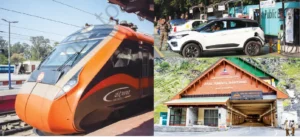
Important In text and exercise question answer for chater 7-Infrastructure: Engine of India’s Development
The Big Question?
1. What is physical infrastructure, and how has it transformed over the years in India?
Answer:
Physical infrastructure includes roads, railways, bridges, ports, airports, power and communication.
Earlier, transport and communication were slow and limited.
Over the years, India has built better highways, rail networks, metro systems and airports.
Modern technology has improved speed, safety and connectivity.
Infrastructure has expanded to remote and border areas.
2. How has the expansion in infrastructure affected the quality of life for individuals and communities?
Answer:
Better roads and transport have reduced travel time.
Electricity and communication have improved education and healthcare.
People can access markets, jobs and services easily.
Infrastructure helps during emergencies and disasters.
Overall, it has made life more comfortable and connected.
3. What is the role of infrastructure in the development and economic prosperity of the nation?
Answer:
Infrastructure supports trade, industry and agriculture.
It helps in movement of goods and people.
Good infrastructure attracts investment and tourism.
It creates employment opportunities.
Strong infrastructure leads to economic growth and national development.
Questions and activities:
1. Which form of physical infrastructure has been built in your area in the last decade? How do you think it has benefitted you or your family members? If you could build something for the community, what would it be?
Answer:
In the last decade, better roads / flyovers / metro / drainage have been built in my area.
These have reduced travel time and made transport safer.
My family members can reach schools, offices, and hospitals easily.
Local shops and markets have also grown.
If I could build something, I would build a community park or a small health centre.
2. How does infrastructure like ports, highways, and airports create jobs in different parts of the country? Can you think of indirect ways people benefit from it?
Answer:
These infrastructures create direct jobs like drivers, engineers, workers, and staff.
They help industries and trade to grow, creating more employment.
Shops, hotels, and transport services benefit indirectly.
Farmers and traders can sell goods in distant markets.
This improves income and living standards of people.
3. Why is it important to think about the environment when building new infrastructure like roads or airports? Can infrastructure development and environmental protection go hand in hand? If yes, how?
Answer:
Infrastructure construction can cause pollution and loss of trees.
It may disturb animals and natural habitats.
Using eco-friendly methods can reduce damage.
Green bridges, solar energy, and proper planning help protect nature.
Yes, development and environmental protection can go hand in hand.
4. How can better infrastructure (like roads, airports, communication systems) help during natural disasters like floods or earthquakes?
Answer:
Strong roads help rescue teams reach affected areas quickly.
Airports and helipads help send relief materials fast.
Communication systems help share emergency information.
Dams and embankments help control floods.
Good infrastructure saves lives and property.
5. Have you ever noticed people misusing public spaces, like scribbling on walls, breaking streetlights, or damaging benches? What are its consequences? Write your observations and suggest solutions to prevent it.
Answer:
Observations
People scribble on walls and damage benches.
Streetlights and public toilets are often broken.
Consequences
Repair costs increase.
Public money is wasted.
Places look dirty and unsafe.
Solutions
Create awareness about public property.
Strict fines and community responsibility.
Encourage citizens to protect shared spaces.
6. Prepare ‘scenario posters’ for the following situations:
Æ A new factory is planned in an area. What form of infrastructure is required for its smooth operation?
Answer:
(a) New factory planned
Good roads and highways
Reliable electricity and water supply
Communication and transport facilities
Housing for workers
Æ Self-cleaning roads, underground highways, and high-speed bullet trains could be part of a futuristic city! Imagine the kind of infrastructure that would be required in the future that could help ease the lives of the people and communities in your city, town or village for various day-to-day functions.
Answer:
(b) Future city infrastructure
Self-cleaning roads
Underground highways
High-speed bullet trains
Smart traffic and waste systems
Renewable energy use
Æ Think about upgrades to the infrastructure near you, considering the terrain of your area, such as coastal, mountainous, plains, etc., and the type of natural calamities your region is prone to.
Answer:
(c) Infrastructure upgrades based on terrain
Coastal areas: strong embankments, cyclone shelters
Mountainous areas: tunnels, strong bridges
Plains: flood control and drainage systems
Æ If you could design a new railway or metro station, what would it look like and what features would you add to make it more fun and comfortable for the passengers?
Answer:
(d) Designing a modern railway/metro station
Clean platforms and waiting areas
Digital boards and free Wi-Fi
Ramps and lifts for elderly and disabled
Green spaces and food courts
7. Today’s modern infrastructure requires consistent technological innovations. For instance, electric vehicles are increasingly being used by people as a cheaper alternative to polluting fuel like diesel or petrol.
Answer:
Electric vehicles reduce pollution and fuel costs.
Smart traffic lights reduce congestion.
Solar-powered streetlights save energy.
High-speed rail improves mobility.
Digital ticketing and apps make travel easy.
To Learn more Click Below:
NCERT Solutions:
Chapter 1-The Story of Indian Farming – CLICK HERE
Chapter 2 – India and Her Neighbours – CLICK HERE
Chapter 3 – Empire and Kingdoms: 6th to 10th Centuries – CLICK HERE
Chapter 4 -Turning tides: 11th and 12th Centuries – CLICK HERE
Chapter 5 – India: A Home to Many- CLICK HERE
Chapter 6 – The State, the government and You- CLICK HERE
Chapter 7 – Infrastructure: Engine of India’s Development – CLICK HERE
Chapter 8 – Banks and the Magic of Finance- CLICK HERE
MCQs:
Chapter 1-The Story of Indian Farming – CLICK HERE
Chapter 2 – India and Her Neighbours – CLICK HERE
Chapter 3 – Empire and Kingdoms: 6th to 10th Centuries – CLICK HERE
Chapter 4 -Turning tides: 11th and 12th Centuries – CLICK HERE
Chapter 5 – India: A Home to Many- CLICK HERE
Chapter 6 – The State, the government and You- CLICK HERE
Chapter 7 – Infrastructure: Engine of India’s Development – CLICK HERE
Chapter 8 – Banks and the Magic of Finance- CLICK HERE
Source Based Questions:
The Story of Indian Farming – CLICK HERE