Questions and activities-Best answers for Exercise questions-Class 7-Subject Social Science
The Big Questions?
1. What major changes characterised this period?
Answer:
Large empires like the Guptas declined.
Many regional kingdoms rose across India.
Power became decentralised, with smaller rulers.
Art, temple building, and literature flourished.
Trade and cultural activities increased in different regions.
2. How did political, cultural, and religious developments shape India during this period?
Answer:
Kings ruled small regions and depended on vassals (sāmantas).
Sanskrit and regional languages both developed.
Hinduism, Buddhism, and Jainism were supported by rulers.
Bhakti movement spread devotion among common people.
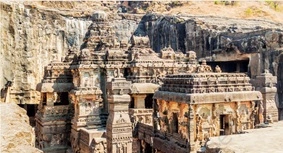
Temple architecture and sculpture reached new heights.
3. What was the impact of foreign invasions and interactions on Indian society and polity?
Answer:
The Hūṇas weakened the Gupta Empire but later merged into Indian society.
Arabs conquered Sindh but had limited control in India.
Indian rulers strongly resisted Arab invasions.
Indian culture remained strong despite invasions.
Trade and exchange of ideas with foreign lands increased.
1. If you lived in Kannauj during the struggle between the Pālas, the Pratīhāras and the Rāṣhṭrakūṭas, how would it change your daily life and your estimate of the rulers? Write a letter on this to your friend living in Kanchipuram.
Answer:
Letter from Kannauj
Kannauj
Date: _______
Dear Friend,
I hope you are well in Kanchipuram. Life in Kannauj has become very difficult these days. The Pālas, Pratīhāras and Rāṣhṭrakūṭas are always fighting to control our city. Because of this, there is fear and confusion everywhere.
Our daily life is disturbed. Markets close often, food becomes costly, and people are worried about safety. Many farmers and traders suffer as soldiers move through the city. Taxes are high to support the armies, and common people face many problems.
I feel the rulers care more about power than about the people. Though they are strong kings, their constant wars bring trouble to us. I wish they would live peacefully and think about the welfare of the people.
Please write back and tell me how life is in your city.
Your loving friend,
2. Emperors and kings during this period controlled only core regions and governed other regions through subordinate vassals. What would be the advantages and the challenges of such a system?
Answer:
Advantages
Kings could control large areas easily.
Local rulers knew regional problems well.
Less pressure on central administration.
Challenges
Vassals could become disloyal.
Frequent rebellions weakened kingdoms.
Central control was often unstable.
3. In what ways were the invasions of the Hūṇas and the Arabs different in their aims, methods, and impact on the Indian subcontinent? Prepare a write-up, discuss and present it in the class.
Answer:
Hūṇas came mainly to plunder and settle.
Arabs aimed to expand political and religious control.
Hūṇas quickly adopted Indian culture.
Arabs ruled Sindh but failed to expand much further.
Arab impact was limited compared to other regions.
More:
4. Imagine you are a common citizen watching the Prayāga assembly. How would you react to Harṣha giving away most of his wealth?
Answer:
I would feel amazed by his generosity.
Poor people would feel grateful.
It would show the king’s kindness and fairness.
People would respect Harṣha more.
It would create unity among religions.
5. Forming groups, let each group choose one Ālvār and one Nāyanār and prepare a biography poster or booklet. Include their life stories and a sample poem or two (in translation).
Answer: Do it yourself with the help of teacher:
Ālvārs and Nāyanārs – Group Activity (Sample Points)
Ālvārs were devotees of Vishnu.
Nāyanārs were devotees of Shiva.
They preached devotion through songs.
They used local languages, not Sanskrit.
Their poems are still sung today.
6. You will notice that our maps show only ancient names for the kingdoms’ capitals and main cities. Using a pencil, mark the modern names next to their original names. Refer the current map of India and try to locate those cities on it.
Answer:
7. Match the ruler or the dynasty with the city.
(a) Raṣhṭrakuṭas (i) Kānchī
(b) Gurjara-Pratihiras (ii) Tanjavur
(c) Cholas (iii) Manyakheṭa
(d) Harṣhavardhana (iv) Ujjayini
e) Pallavas (v) Kanyabhuja
Answer: a-iii, b-iv, c-ii, d-v, e-i
To Learn more Click Below:
NCERT Solutions:
Chapter 1-The Story of Indian Farming – CLICK HERE
Chapter 2 – India and Her Neighbours – CLICK HERE
Chapter 3 – Empire and Kingdoms: 6th to 10th Centuries – CLICK HERE
Chapter 4 -Turning tides: 11th and 12th Centuries – CLICK HERE
Chapter 5 – India: A Home to Many- CLICK HERE
Chapter 6 – The State, the government and You- CLICK HERE
Chapter 7 – Infrastructure: Engine of India’s Development – CLICK HERE
Chapter 8 – Banks and the Magic of Finance- CLICK HERE
MCQs:
Chapter 1-The Story of Indian Farming – CLICK HERE
Chapter 2 – India and Her Neighbours – CLICK HERE
Chapter 3 – Empire and Kingdoms: 6th to 10th Centuries – CLICK HERE
Chapter 4 -Turning tides: 11th and 12th Centuries – CLICK HERE
Chapter 5 – India: A Home to Many- CLICK HERE
Chapter 6 – The State, the government and You- CLICK HERE
Chapter 7 – Infrastructure: Engine of India’s Development – CLICK HERE
Chapter 8 – Banks and the Magic of Finance- CLICK HERE
Source Based Questions:
The Story of Indian Farming – CLICK HERE
Pingback: NCERT Solutions-Chapter 5-India, a Home to Many-Class 7 SST